
On Reading
The Quiet Power of Books


There is a particular silence that comes when you open a book.
This isn’t the silence of an empty room but of something fuller than that. The world tilts away. The mug of tea goes cold at your elbow without your noticing. And you are somewhere else entirely: another country, another century, the hidden corridors behind a stranger’s eyes. I have spent a great deal of my life chasing that silence, and I have never once been sorry.
I came to it early, and it saved me more than once. When I could not understand my own life, I could always understand a book’s. Somewhere in the understanding of the book, my own life would quietly clarify, the way a room comes into focus when your eyes adjust to the dark. Books were a portal. They were, more often than I like to admit, a friend. The kind that says the true thing and then waits, patiently, while you take it in.
Here is what I have come to understand about reading:
When you read, you are not being told a story. You are making one.
The page gives you small black shapes on white. Everything else, the whole living world of the book, you build yourself. The face of the heroine, the smell of the harbor, the weather of a sentence; none of it is on the page. It is in you, summoned up out of your own store of mornings and faces and weather. The writer hands you the seeds. You grow the garden. This is why no two people ever read the same book, and why a book read at twenty is a different book at forty. The text holds still. The reader does not.
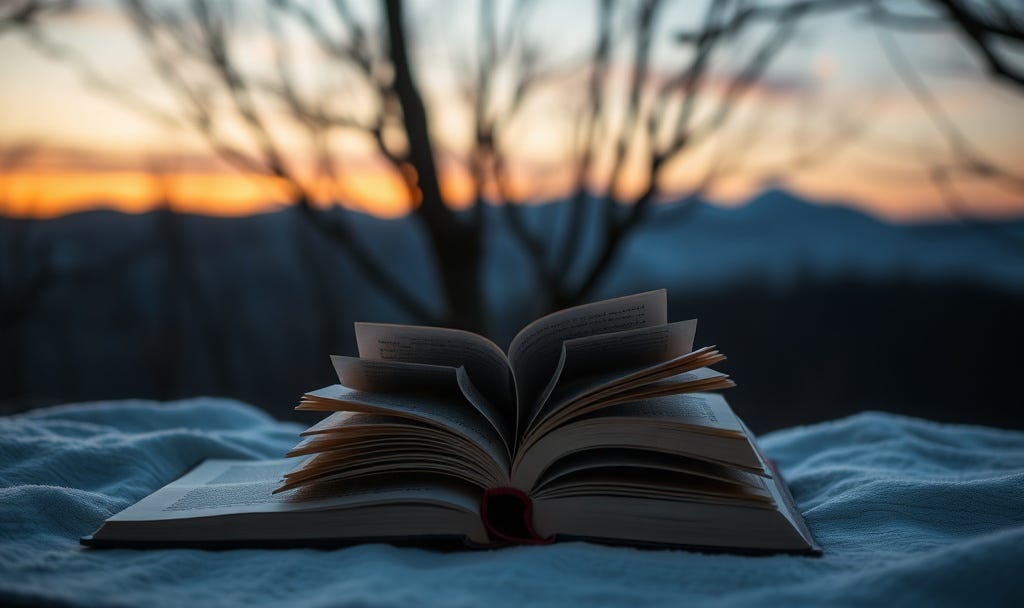
That is the quiet power. It offers escape, certainly, but its greater power lies in participation. For the length of the reading, you are a co-creator of a world. Your imagination is not a spectator. It is doing the deep, invisible work of making something real.
I think about this most when I watch how easily we have traded it away.
The screen is right there, always, glowing and generous, asking nothing of me. And it gives me a great deal; I will not pretend otherwise. But the giving runs one direction. The screen hands me a finished world, fully rendered, and asks only that I receive it. Someone else has already done the imagining. I get to be a guest in their picture rather than the maker of my own. There is a pleasure in that, the pleasure of being carried. But you cannot build a muscle by being carried. And when I let the screen do my imagining for me too many evenings in a row, the part of me that once learned to grow whole gardens from a handful of marks on a page begins to slacken.
I notice it most with children. A child read to in the dark, night after night, is being handed something it will take them years to understand the size of: the discovery that words can open into worlds, and that they hold the key. A child handed a screen instead gets the worlds without the key. They get the garden but never learn they could have grown one.
I am not against the screen. I am writing this on one. The point was never purity.
The point is only that I do not want to forget the older thing, that slow, deep act of world-building: sitting in a particular silence with a book in my hands and growing a whole country out of nothing but marks and my own attention.

So I keep doing it. Ten minutes before sleep, if that is all there is. A book that genuinely interests me, never one I think I should read. And every time, the same small miracle: the room falls away, the tea goes cold, and I am somewhere else, making it real as I go.
One page at a time.
The quietest power I know.